Rethinking ERP in Perth: A New Approach to Cost, AI, and Sustainability
Across Perth and Western Australia, organisations in mining, construction, and infrastructure are increasingly relying on ERP systems such as Microsoft Dynamics 365 and SAP S/4HANA to manage operations.
However, a growing challenge is becoming clear:
The cost of running traditional ERP systems is rising faster than the value they deliver.
From licensing fees to integrations and cloud consumption, ERP is no longer just a system—it’s a significant ongoing cost centre.
💰 Why ERP Costs Are Increasing in Australia
Many organisations attempt to reduce ERP costs by:
Reducing user licenses
Extending systems with Microsoft Power Platform
Moving workloads into Microsoft Azure
While this approach appears effective initially, it often creates a hidden issue:
ERP costs don’t disappear—they shift into cloud consumption, API calls, and automation layers.
This creates unpredictable cost models that are difficult to manage, especially in large-scale operations across Western Australia.
⛏️ The Mining Industry Challenge in WA
In Perth-based mining and resource companies, ERP systems are commonly used for:
Financial management
Job and project costing
Asset management
Maintenance
Rostering and scheduling
Accounts payable and receivable
This leads to:
High ERP user counts
Increased licensing costs
Slower operational efficiency
However, ERP systems are fundamentally designed for:
Financial control, compliance, and reporting—not operational execution.
🧠 A Smarter Model: Agentic AI + Lean ERP
A new architecture is emerging across forward-thinking Australian organisations:
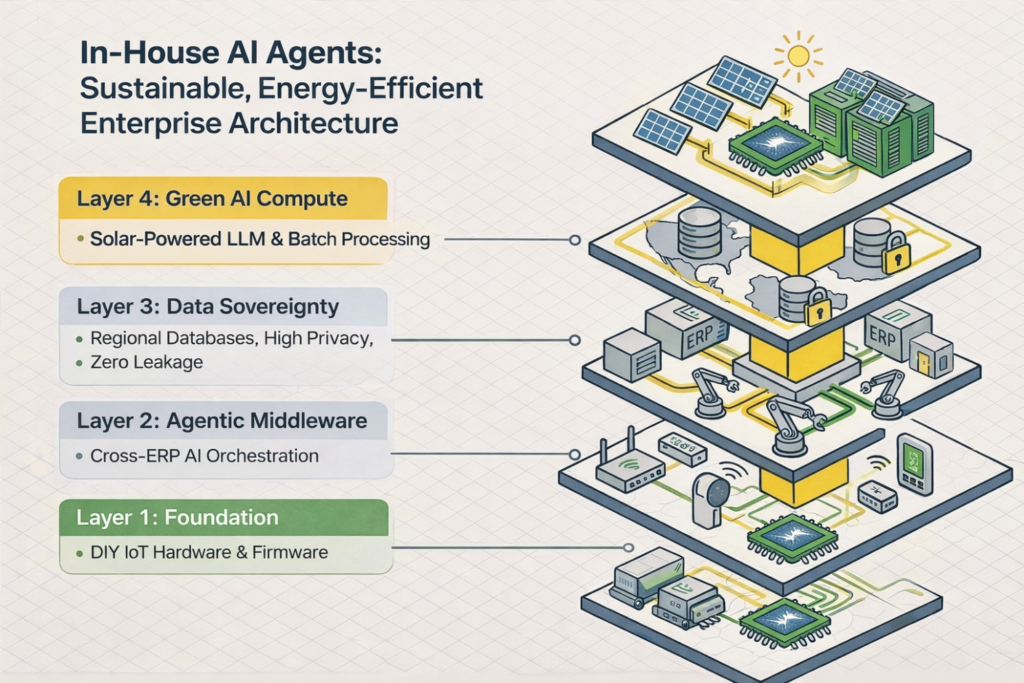
Operations → Agentic AI → ERP (Finance Core Only)
Instead of relying on users to operate ERP systems, AI agents handle processes autonomously.
🤖 What Is Agentic AI in Enterprise Systems?
Agentic AI refers to intelligent systems that:
Observe data (IoT, invoices, system inputs)
Reason using AI models and business rules
Act by executing transactions and workflows
Learn from outcomes over time
These systems can be implemented using modern frameworks and orchestration layers, reducing reliance on manual ERP interaction.
🔄 Real Use Cases in Perth Organisations
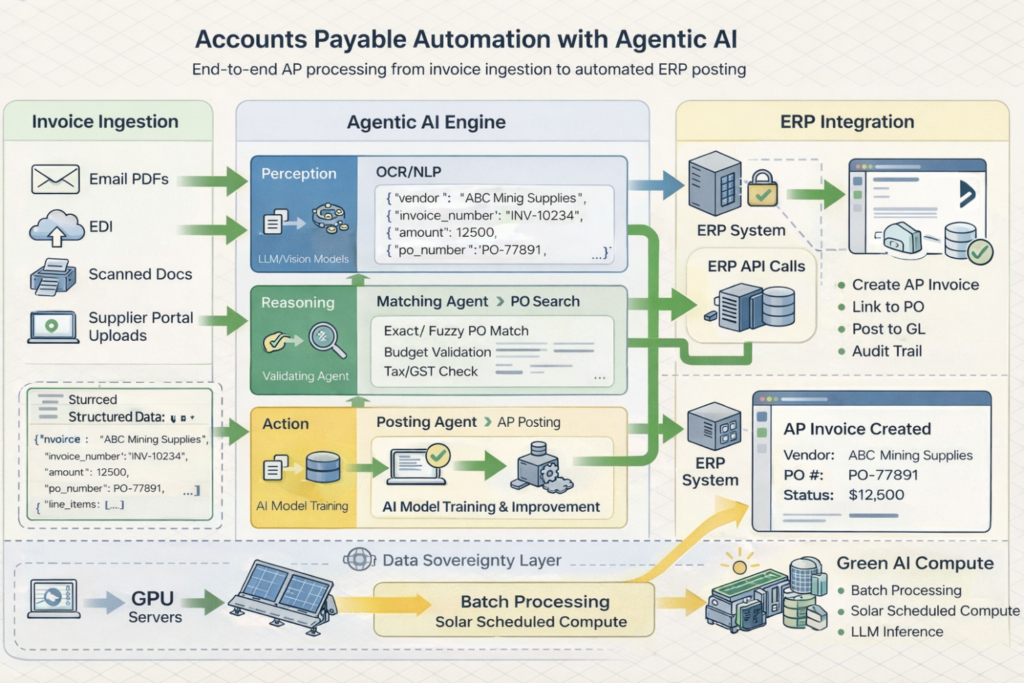
📊 Accounts Payable Automation
AI reads invoices
Matches with purchase orders
Posts directly into ERP
👉 No manual data entry 👉 Fewer ERP users required
⚙️ Maintenance and Asset Management
Sensors detect anomalies
AI predicts failures
Automatically schedules maintenance and orders parts
👷 Workforce Scheduling
AI optimises rostering
Sends cost data to ERP
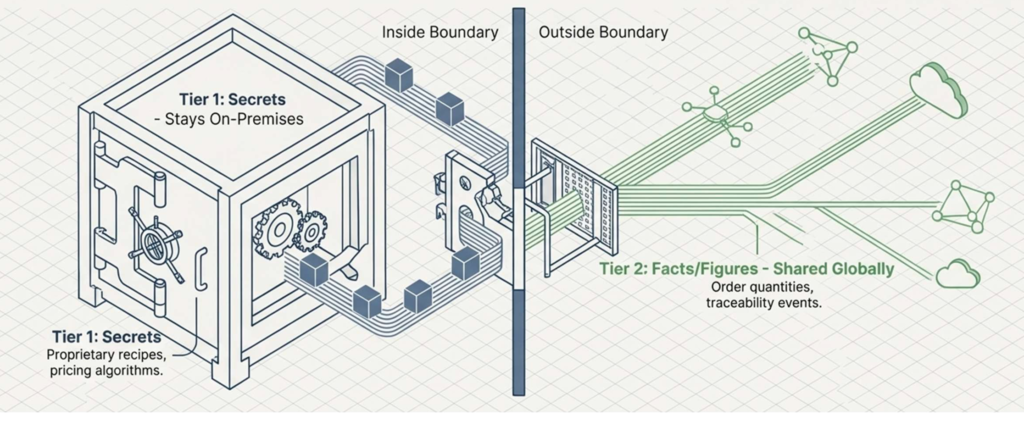
🔐 Data Sovereignty for Australian Businesses
One of the biggest concerns for organisations in Australia is data control.
With cloud-based solutions:
Data may leave the country
Sensitive operational data is exposed to external services
💡 In-House AI Advantage
By implementing AI models internally:
Data remains within Australia
No external API dependency
Full control over security boundaries
This is especially critical for:
mining
government
infrastructure sectors
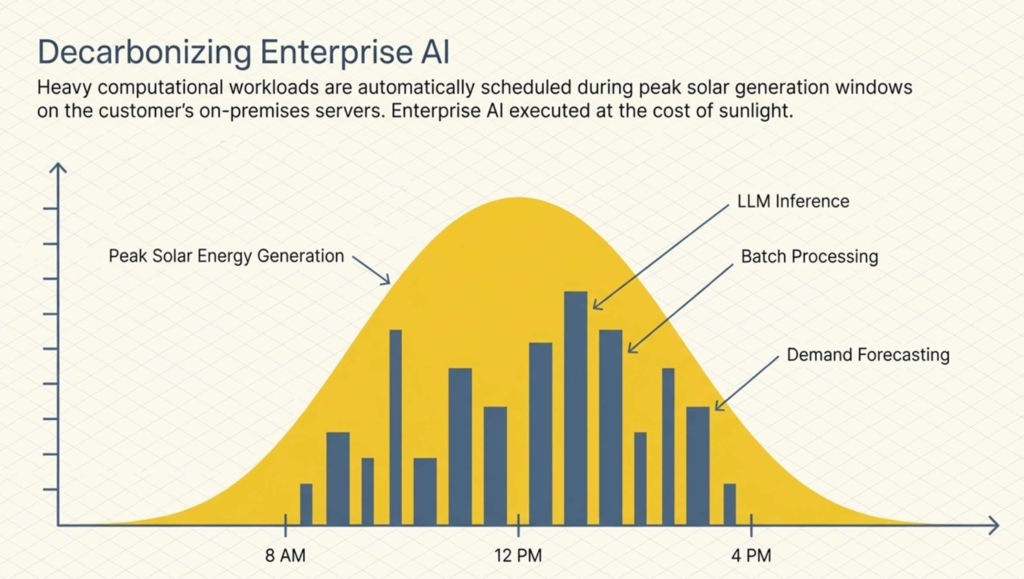
🌱 Green AI: Reducing Costs with Energy-Aware Computing
A major innovation in enterprise architecture is the concept of energy-aware AI.
Instead of running AI workloads continuously in the cloud:
Compute workloads can be scheduled during peak solar energy periods.
8
⚡ Benefits for Perth Organisations
Lower operational costs
Reduced cloud dependency
Alignment with sustainability goals
Improved ESG compliance
Western Australia, with its high solar availability, is uniquely positioned to benefit from this approach.
⚖️ The Strategic Shift in Enterprise IT
Traditional thinking has focused on:
Expanding ERP capabilities
Extending with apps and cloud services
Increasing system complexity
🚀 A New Direction
Minimise ERP footprint
Introduce agent-based automation
Run AI in-house
Align compute with energy strategy
💰 Business Impact
Organisations adopting this model can achieve:
30–60% reduction in ERP-related costs
Reduced dependency on vendor ecosystems
Improved operational efficiency
Stronger data security
More predictable IT spending
🧭 Final Thoughts
ERP systems are no longer the centre of enterprise operations.
They are becoming financial backbones—supported by intelligent, autonomous systems.
For organisations in Perth and across Australia, the opportunity is clear:
Reduce costs
Improve efficiency
Build sustainable, future-ready systems
💬 Conclusion
The future of ERP in Australia is not about adding more functionality.
It is about:
rethinking how systems operate, how data flows, and how intelligence drives business decisions.